
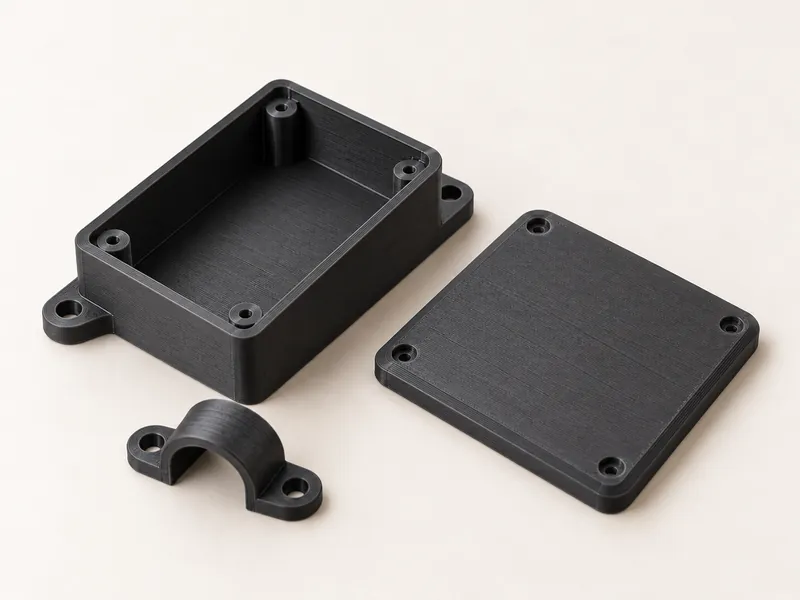
PBT 3D printing: the plastic that ignores oil and moisture
What PBT is, how it differs from PETG and nylon, and when to print it: electrical housings, engine parts and parts that must keep their size.
Practical answers before you order a part: real prices, materials, files and spare parts. With figures from our workshop, not brochures.
What PBT is, how it differs from PETG and nylon, and when to print it: electrical housings, engine parts and parts that must keep their size.
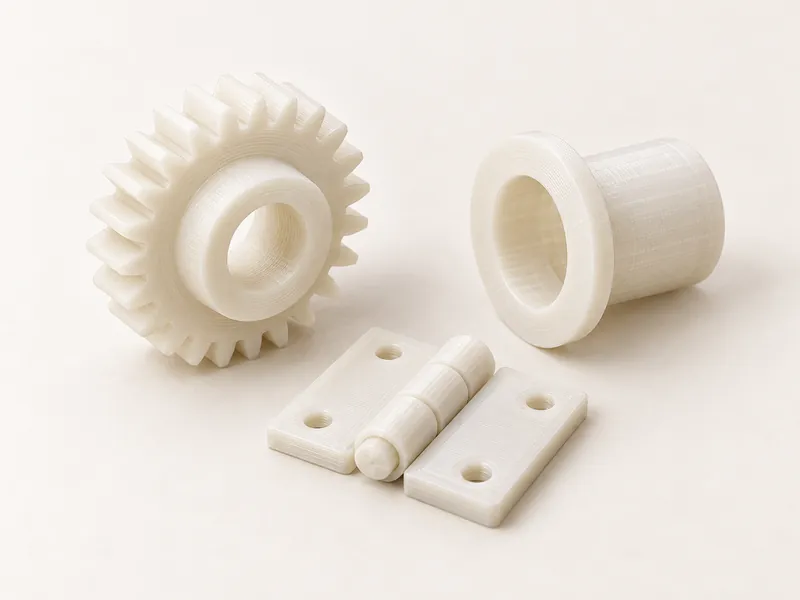
When to print in nylon: gears, bushings, hinges and parts that work with oil. PA6 or PA12, with or without fibre, and why it has to be dried.
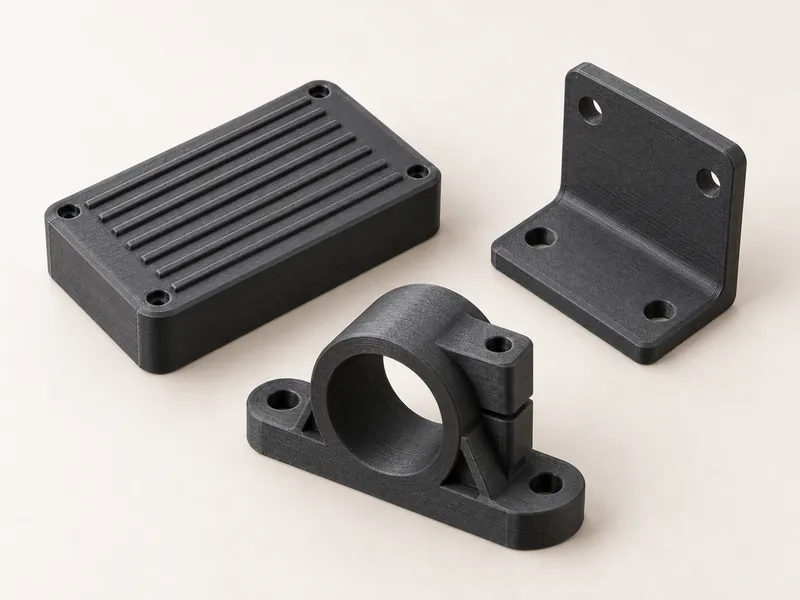
PLA-CF, PETG-CF, PA-CF, PA-GF: what adding fibre changes, when to choose carbon and when glass, and when you need neither.
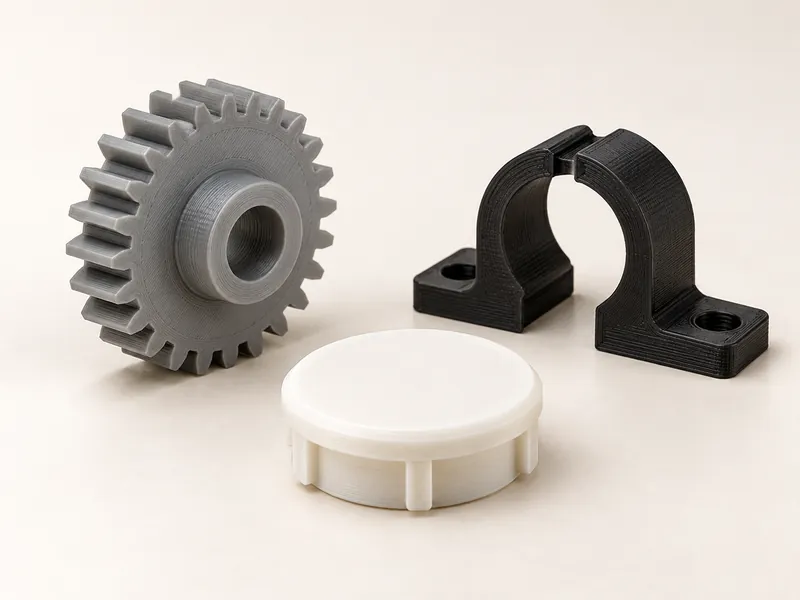
If a part is no longer sold, it can be 3D printed from the original or from photos. Process, lead times, prices and which parts should not be printed.
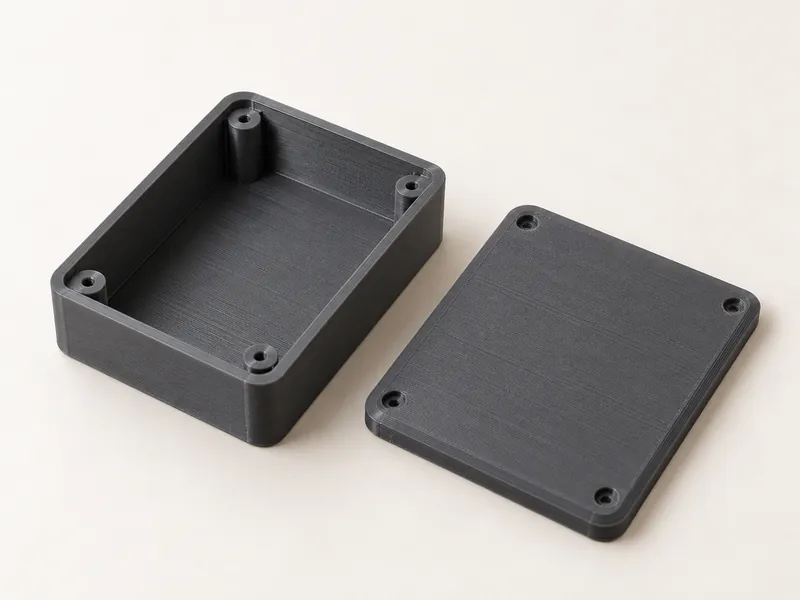
PLA for indoor parts, models and prototypes; PETG for parts that work, get wet or go above 55 °C. Real differences, prices and when to use neither.
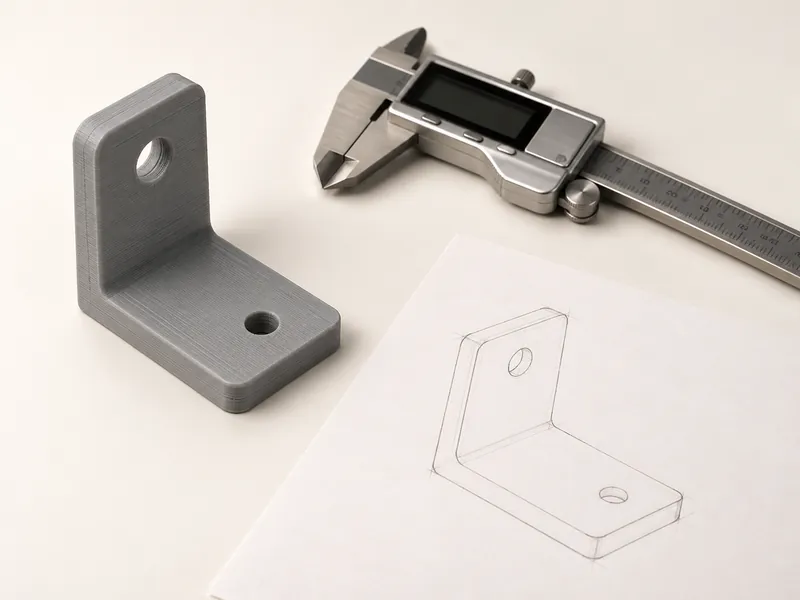
With €10 calipers and your phone you can measure a part for 3D printing. What to measure first, how to take the photos and the mistakes that stop it from fitting.
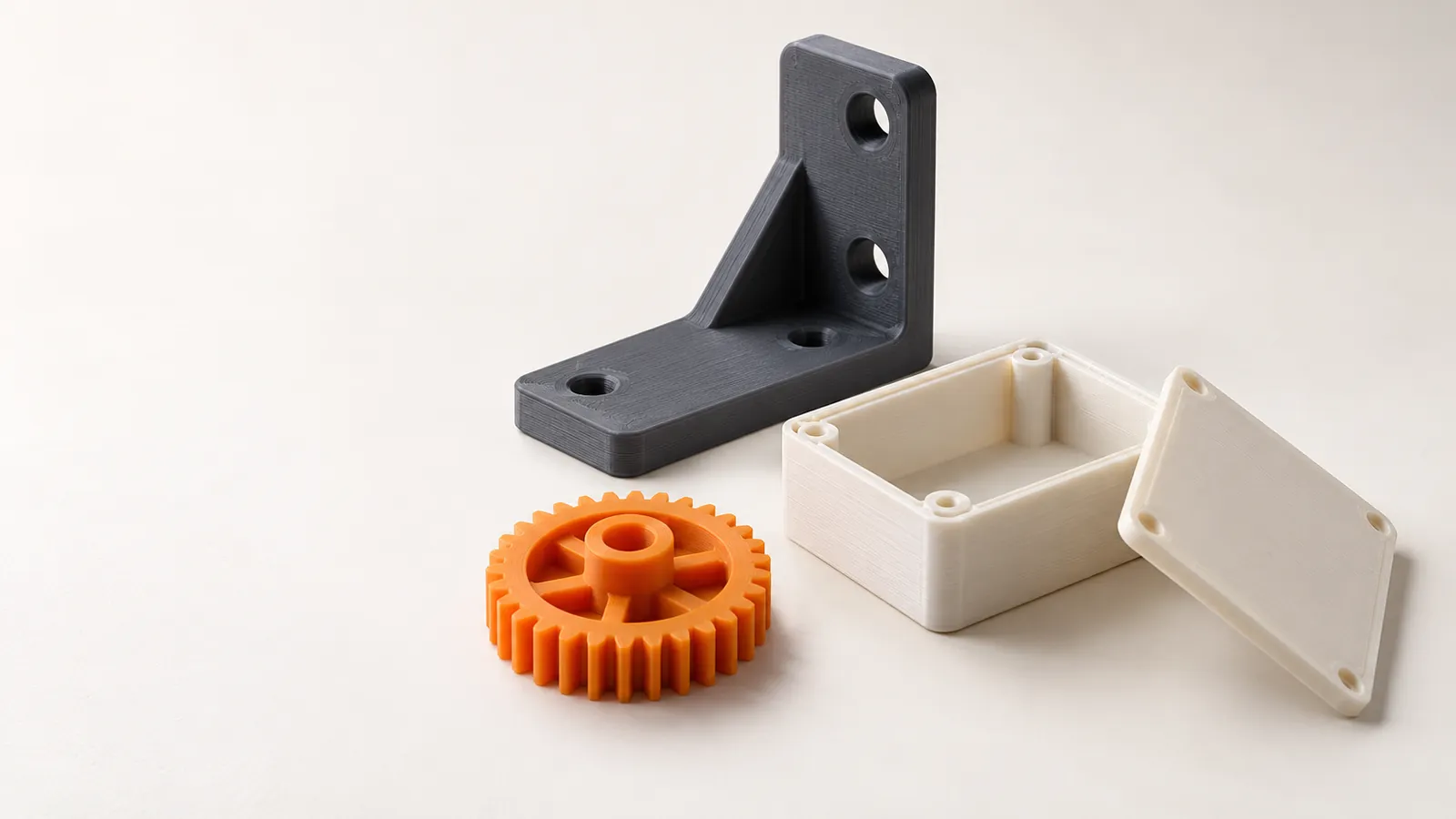
A small PLA part costs from €6, a 100 g part about €16 and a 240 g part about €29. What makes the price go up or down, with real examples.
Upload your file and get price and lead time in under a minute. No sign-up, no commitment.